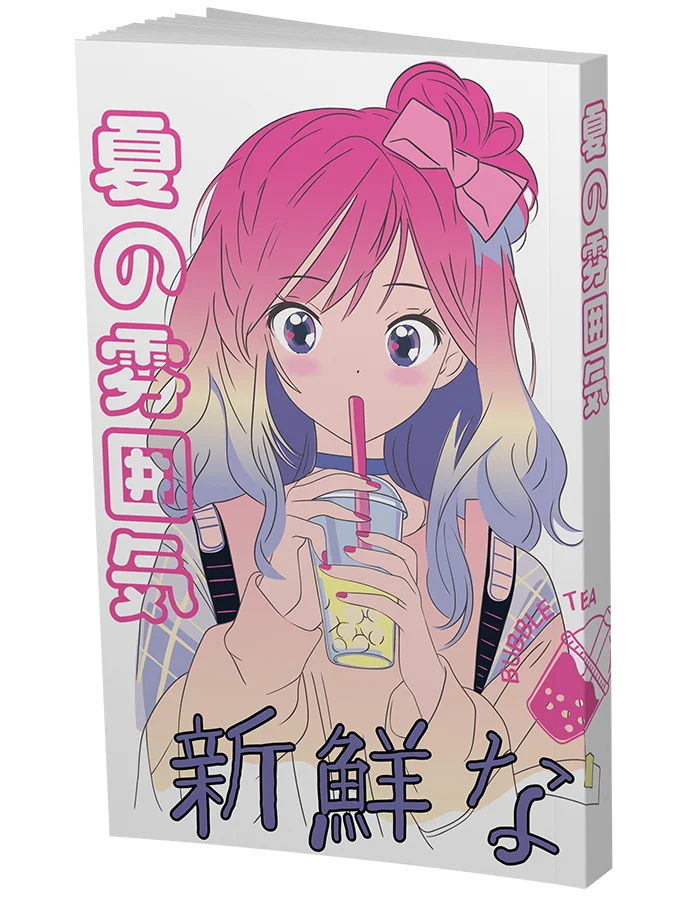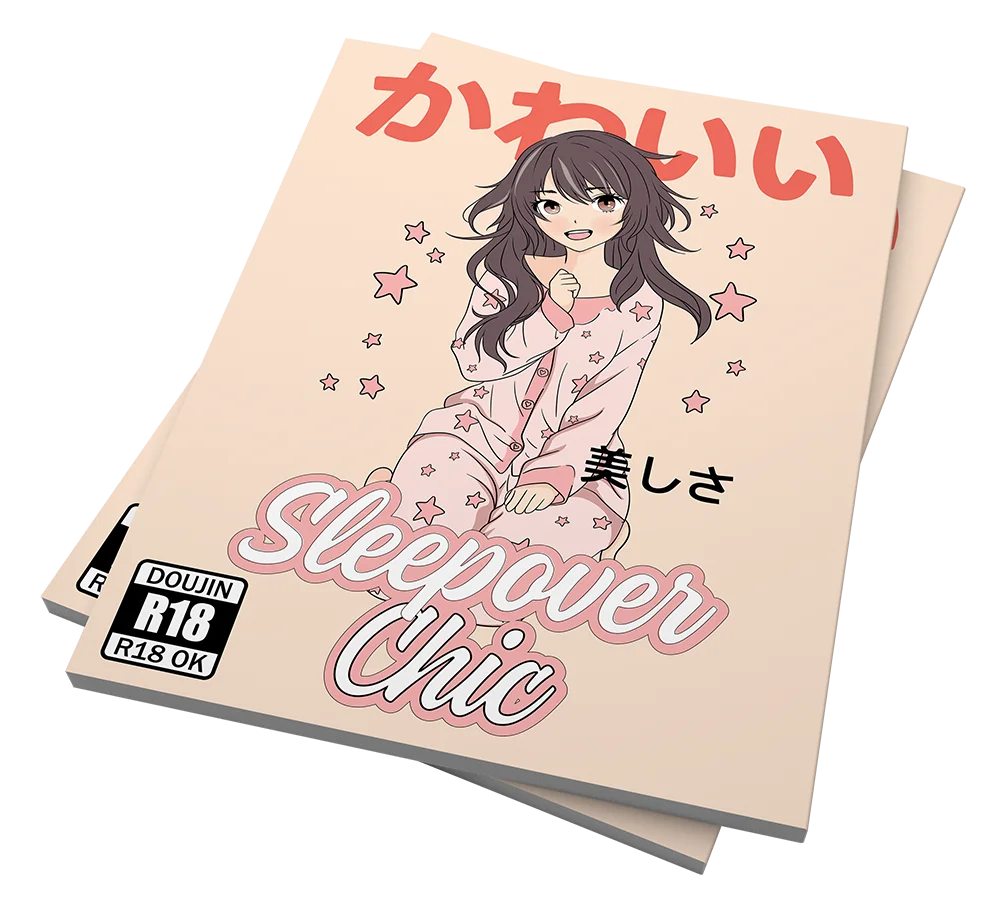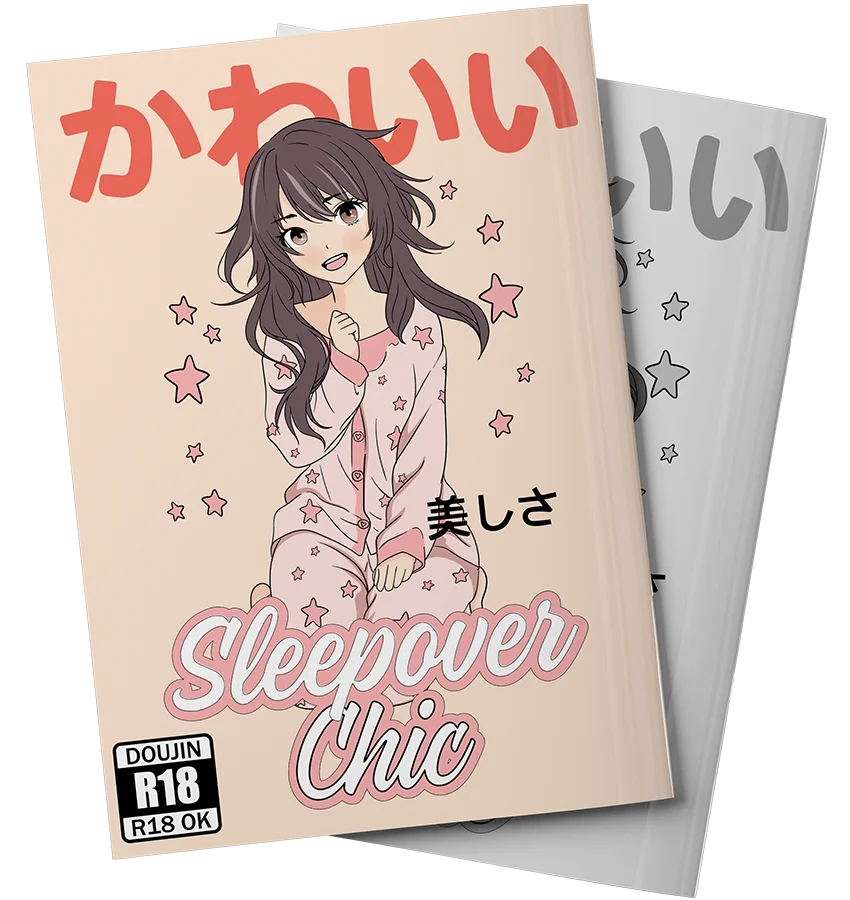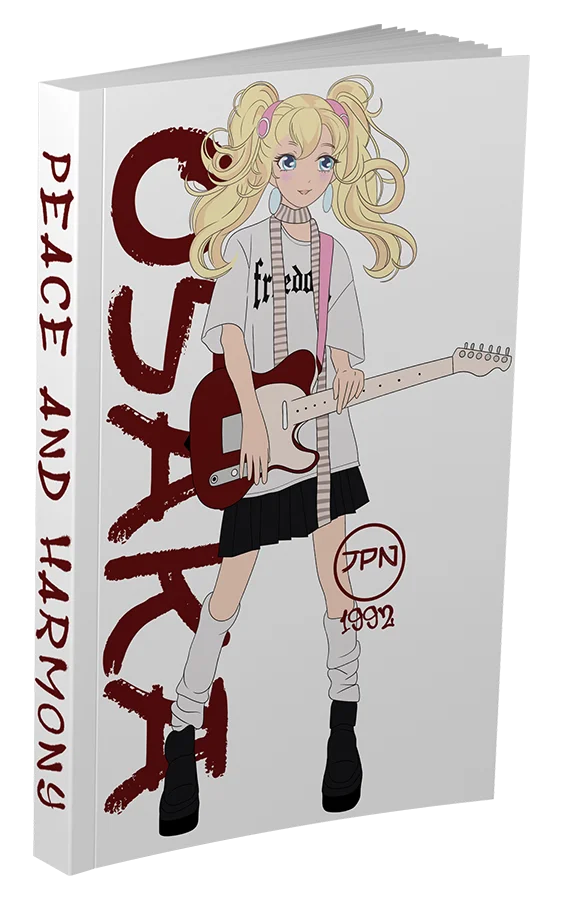
Unlike Western comic books—which use glossy paper, full-color inks, and 6.625" × 10.25" trim sizes—authentic Japanese Manga (単行本) and Doujinshi (同人誌) rely on warm uncoated paper texture, crisp black-and-white halftone contrast, specific JIS/ISO metric dimensions, and Right-to-Left (RTL) binding. Whether you are preparing a custom manga volume for retail release or a short-run convention doujinshi for Artist Alley, use this specification guide to set up your files like a pro.
1. Standard Manga & Doujinshi Dimensions Chart (B6, B5, A5 & US Trim Sizes)
Avoid printing manga at 8.5" × 11" (US Letter)—it immediately looks like an office document rather than a bookstore volume. Below are the official Japanese and North American trim sizes supported on our Manga Printing and Doujinshi Printing presses, including exact canvas sizes with a standard 0.125" (3.175 mm) full bleed at 300 DPI:
| Format Name | Trim Size (Inches) | Trim Size (mm) | With 0.125" Bleed (300 DPI px) | Best Use Case |
|---|---|---|---|---|
| Bunkobon (A6) | 4.13" × 5.83" | 105 × 148 mm | 1314 × 1824 px | Pocket-sized Light Novels & compact anthology reprints |
| Japanese Tankōbon (JIS B6) | 5.04" × 7.17" | 128 × 182 mm | 1587 × 2226 px | Authentic Japanese retail manga volumes & Seinen releases |
| US Standard Manga (Tankōbon) | 5.00" × 7.50" | 127 × 190.5 mm | 1575 × 2325 px | North American retail standard (Shonen Jump / VIZ / Kodansha US shelf size) |
| US Digest Manga | 5.50" × 8.50" | 139.7 × 215.9 mm | 1725 × 2625 px | Popular US indie manga, Light Novels, and Zines |
| Kanzenban / Wide-ban (ISO A5) | 5.83" × 8.27" | 148 × 210 mm | 1824 × 2556 px | Deluxe collector manga editions, novel anthologies & A5 doujinshi |
| ISO B5 Doujinshi | 6.93" × 9.84" | 176 × 250 mm | 2154 × 3027 px | International B5 fan comics, zines & illustration books |
| JIS B5 Doujinshi (Comiket Standard) | 7.17" × 10.12" | 182 × 257 mm | 2226 × 3111 px | Authentic Japanese Comiket standard for B5 Doujinshi & art books |
Need pre-sized PSD, Clip Studio Paint, or InDesign files? Download ready-to-use bleed and margin guides from our Free Print Templates library, or calculate your exact wrap-around cover dimensions using our Book Spine Width Calculator.
2. What Paper Is Manga Printed On? (Interior & Cover Paper Weights)
The unmistakable “manga feel” comes from choosing the right paper stock and opacity so heavy black ink fills don't show through the back of the page:
Interior Paper Stocks
- 60lb Uncoated Text (89–104 GSM): The authentic Japanese tankōbon and light novel favorite. This gives the volume a flexible, easy-to-thumb bookstore feel.
- 60lb / 80lb White Uncoated Opaque Text (89–118 GSM): Crisp, bright white uncoated paper with high opacity. Ideal for black-and-white manga and doujinshi with heavy ink coverage or lower page counts where extra sheet sturdiness is desired.
- 80lb / 100lb Gloss or Matte/Silk Text (118–148 GSM): Smooth coated stock engineered for full-color art books, webtoon collections, and vibrant Kuchi-e (口絵) color insert pages.
Split-Media Kuchi-e (口絵) Color Inserts
Traditional Japanese manga and light novels often open with 2 to 8 full-color pages on glossy paper before transitioning into uncoated black-and-white story pages. In our Online Book Builder, you can configure split-media color inserts—only paying color pricing for the exact pages Printed in Color while the rest of your book prints at economical B&W rates.
Cover Stocks & Protective Laminations
- 100lb Silk Cover / 12pt–14pt C1S Cardstock (250–300 GSM): Heavyweight retail cover stock that creases cleanly at the spine hinge without cracking. If your project includes inner-cover printing (printing on the inside front and back covers), select 100lb Silk Cover coated on both sides (C2S).
- Protective Gloss Lamination: High-vibrancy, reflective finish that makes cover colors pop and protects against convention table handling. Standard for Shonen manga and action series.
- Protective Matte Lamination: Smooth, satin, glare-free architectural finish that diffuses venue lighting and gives dark or pastel cover artwork a refined, gallery-grade look.
3. Preventing Moiré Patterns on Manga Screentones
Manga artists rely on halftone dots and digital screentones (in Clip Studio Paint EX, Photoshop, or Procreate) to create shading. If exported improperly, overlapping halftone grids create an unwanted crosshatch distortion called a moiré pattern.
- Canvas Resolution: Draw monochrome line art and screentones at 600 DPI to 1200 DPI (or minimum 300 DPI for grayscale/color).
- 1-Bit Monochrome vs. Grayscale: Keep traditional dot screentones at 100% pure black (1-bit threshold) without anti-aliasing, or export flattened PDF/X-1a files at native resolution so our Konica Minolta AccurioPress Fiery RIP engines preserve every dot cleanly.
- Line Frequencies (LPI): Keep screentone frequencies between 60 LPI and 70 LPI for B6/A5 volumes, or up to 85 LPI for large B5 doujinshi. Use our Image DPI Checker to verify your resolution before uploading.
4. Right-to-Left (RTL) Binding vs. Left-to-Right (LTR)
Never force manga readers to read backwards. We natively manufacture both traditional Japanese Right-to-Left (RTL) and Western Left-to-Right (LTR) books:
- Page 1 Placement: In an RTL manga, Page 1 starts on the left side of the open spread (and odd-numbered pages sit on the left; even-numbered pages sit on the right).
- Cover Spread Orientation: When designing a full wrap-around cover for an RTL book, the Front Cover is on the LEFT half of the spread, the Back Cover is on the RIGHT half, and the spine sits in the center.
- 3D Live Proofing: When you upload your PDF into our Interactive Prepress Builder, toggle Reading Direction to Right-to-Left (RTL) to inspect your page flips, gutter margins, and spine alignment in an interactive 3D WebGL proof before we go to press.
5. Choosing Binding: Saddle Stitch vs. Perfect Bound
- Saddle Stitch (Stapled Spine — 8 to 80 Pages): Folded sheets stapled through the center fold. Lies flat and requires page counts in multiples of 4 (e.g., 16, 24, 32, 48 pages). The classic format for one-shot B5 Doujinshi, convention single issues, and fanzines.
- Perfect Bound (Square Glued Spine — 28 to 400+ Pages): Milled interior pages bonded into a heavy wrap-around cardstock cover with industrial PUR/EVA adhesive. Produces a printable square spine for bookshelf display—the standard for Tankōbon Manga Volumes, omnibus editions, and Light Novels.
Ready to Print Your Manga or Doujinshi in the USA?
Every order is printed in-house at our US facility with no minimum order quantities (print 1 proof copy, 25 copies for Artist Alley, or 2,000+ copies for a Kickstarter or retail release) and guaranteed Anime Convention Delivery Deadlines.